
History
The Gulf Medal was awarded for service in the areas of operations in the Middle East during the Gulf War of 1990 and 1991, the coalition campaign that reversed Iraq's invasion and annexation of Kuwait. British forces served in the great air and land offensive, Operation Granby, that liberated Kuwait in early 1991, and the medal recognises that service.
Two clasps were awarded: 2 Aug 1990, for service in Kuwait on the day of the Iraqi invasion, and 16 Jan to 28 Feb 1991, for service in the operational area during the coalition offensive. This is a British award; Australians who served in the Gulf War, chiefly the Royal Australian Navy ships enforcing sanctions and the clearance divers, received the Australian Active Service Medal with the relevant clasp. Where held, the Gulf Medal takes its place in the Australian Order of Wearing.
Design & ribbon
The medal
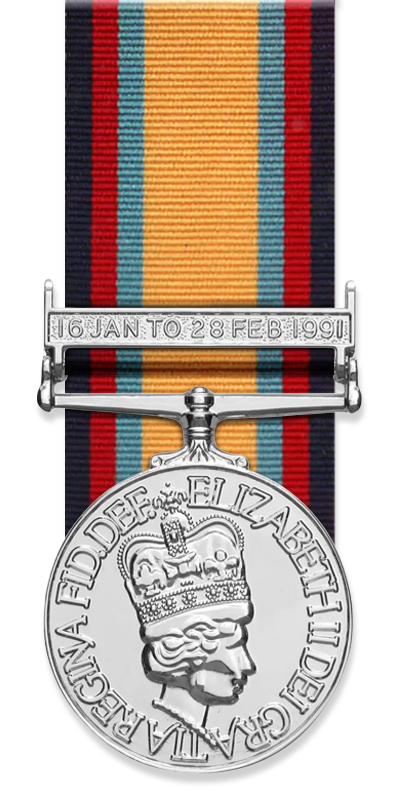
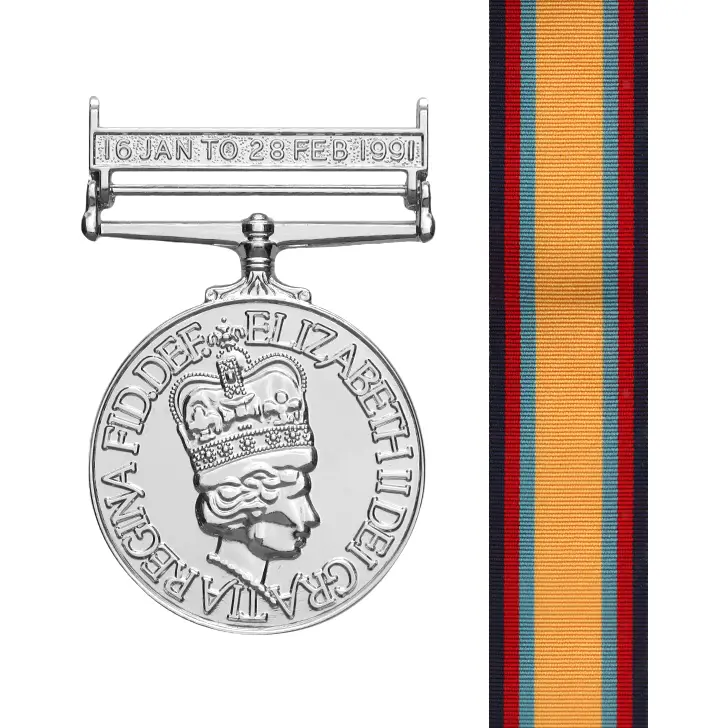
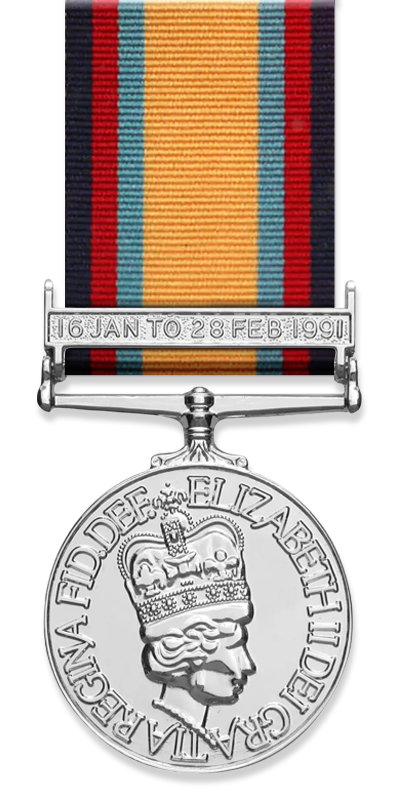
The medal is silver and circular, its obverse bearing the crowned effigy of Queen Elizabeth II. The reverse bears a laurel wreath and the words THE GULF beneath a crown. The recipient's details are impressed on the rim.
The ribbon
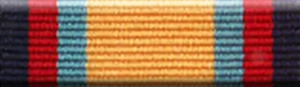
Sand-coloured centre with service stripes.
The ribbon has a broad central sand-coloured band flanked by stripes of light blue, dark blue and red, representing the desert and the three services.
Clasps
Service in the invasion and in the liberation offensive is marked by dated clasps.
Eligibility
The medal was awarded for service in the areas of operations in the Middle East during the Gulf War.
- The clasp 2 Aug 1990 marks service in Kuwait on the day of the Iraqi invasion; the clasp 16 Jan to 28 Feb 1991 marks seven days' continuous service in the operational area during the coalition offensive;
- There is no minimum period for those killed, wounded, decorated or mentioned in despatches; the Kuwaiti and Saudi liberation medals could be accepted but not worn by British personnel;
- This is a British award; Australians received Australian awards for the same service. Where held, it takes its place in the Australian Order of Wearing.
Order of wear
Imperial awards were the honours of Australia before the Australian honours system was established in 1975, and they retain their place in the Order of Wearing. They are worn after the Australian honours of their kind and among the Imperial awards in the order set by the Australian Order of Wearing, which follows the British order of precedence.
Frequently asked questions
What is the Gulf Medal awarded for?
Service in the areas of operations in the Middle East during the Gulf War of 1990 and 1991, the coalition campaign that liberated Kuwait from Iraqi occupation.
What are its clasps?
2 Aug 1990, for service in Kuwait on the day of the invasion, and 16 Jan to 28 Feb 1991, for service in the operational area during the liberation offensive.
Would an Australian wear this medal?
Australians who served in the Gulf War received the Australian Active Service Medal with the relevant clasp; the British Gulf Medal is a foreign award, worn in the Australian order among other governments' awards where held.
Could British personnel wear the Kuwaiti and Saudi medals?
The Queen granted permission for British personnel to accept but not wear the Kuwaiti Liberation Medal and the Saudi Liberation of Kuwait Medal.
What does the reverse show?
A laurel wreath and the words THE GULF beneath a crown.
Is it named to the recipient?
Yes, impressed on the rim.