
History
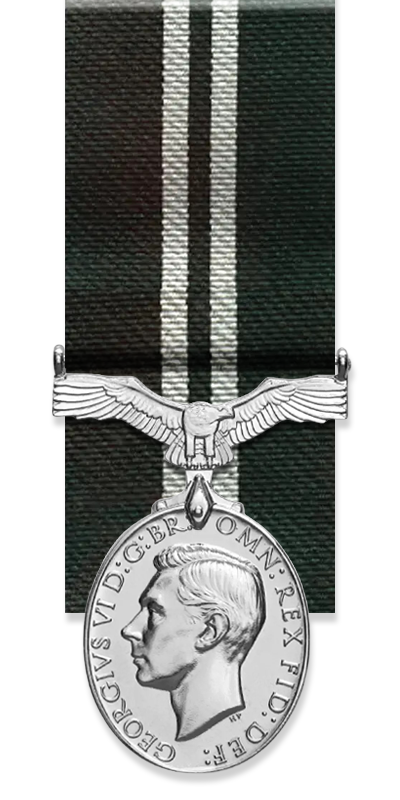
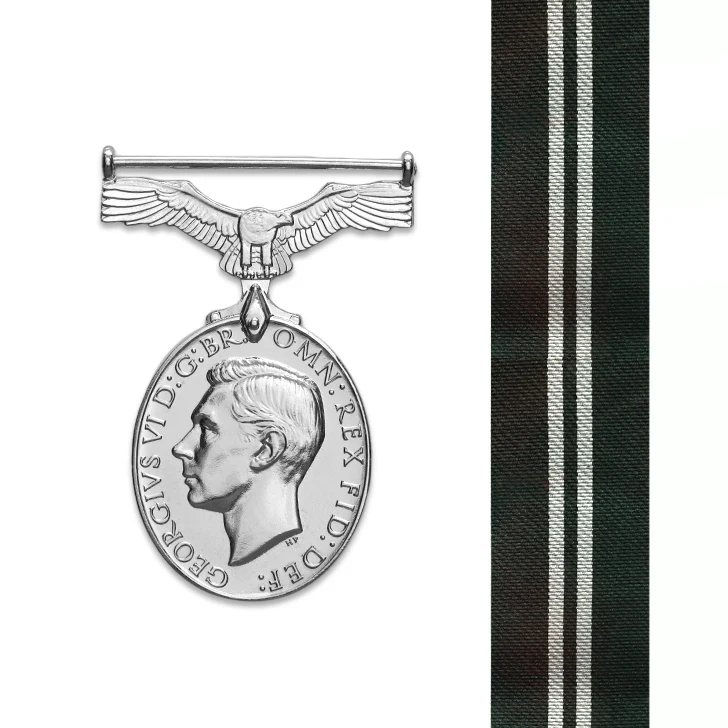
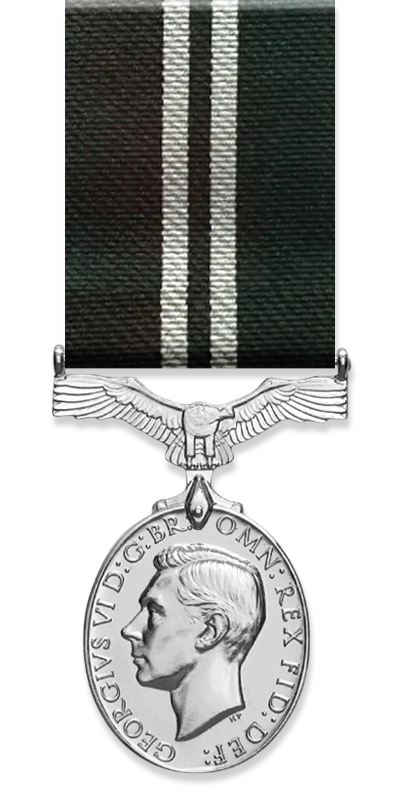
This is the Air Efficiency Award of the reign of King George VI, carrying his effigy. The award itself, instituted in 1942, is described more fully on the main page; as the first issue of the award, the George VI version belongs to the Second World War and its aftermath, when the reserve and auxiliary air forces were mobilised and their long-serving members recognised. It was one of the first awards to reach the Citizen Air Force in Australia.
Ten years of efficient service was required, with wartime service counted at an enhanced rate. Uniquely among the older services' long service awards, it covered both officers and other ranks with a single medal; officers who received it are entitled to the post-nominal letters AE. As an Imperial award it retains its place in the Australian Order of Wearing.
Design & ribbon
The medal
The medal is oval silver, its obverse bearing the crowned effigy of King George VI. The reverse bears the inscription FOR AIR EFFICIENCY AWARD with a laurel spray, surmounted by an eagle. The recipient's details are impressed on the edge, and it hangs from a straight bar suspender.
The ribbon
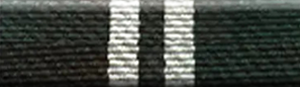
Green with a central pale blue stripe.
The ribbon is green with a broad central pale blue stripe edged in narrow deeper blue, the colours of the air services on the green of the auxiliary forces.
Clasps
A further period of efficient service is recognised by a clasp on the ribbon.
Eligibility
The George VI issue was awarded on the criteria of the Air Efficiency Award.
- Ten years of efficient service by part-time reserve and auxiliary air force personnel was required, with wartime service counted at an enhanced rate;
- A clasp is awarded for a further period of service; officers are entitled to the post-nominal letters AE, other ranks to none;
- As an Imperial award it retains its place in the Australian Order of Wearing.
Order of wear
Long service and efficiency awards recognise years of service rather than a campaign. In the Australian Order of Wearing they are worn after coronation and jubilee medals and among the long service awards by their own order of precedence.
Frequently asked questions
What makes this the George VI issue?
The crowned effigy of King George VI on the obverse; it was the first issue of the award, instituted in 1942.
What is the award for?
Long and efficient service by part-time reserve and auxiliary air force personnel: ten years, with wartime service counted at an enhanced rate.
Who could receive it?
Both officers and other ranks of the reserve and auxiliary air forces, including the Citizen Air Force in Australia, a single award unusually covering all ranks.
Does it carry a post-nominal?
Officers are entitled to the letters AE; other ranks receive no post-nominal.
How is it different from the Elizabeth II issue?
Only in the sovereign's effigy; the reverse, ribbon and criteria are common to both issues.
Is it named to the recipient?
Yes, impressed on the edge with the recipient's details.