
History
The Operational Service Medal was established in 1999 to replace the General Service Medal of 1962 for new operations. A single medal design serves every campaign, each distinguished by its own ribbon, whose common centre of a broad red stripe flanked by navy and light blue represents the three services, with a distinctive outer colour for each theatre. The Afghanistan version recognises operational service on or in support of operations in Afghanistan from 11 September 2001 through the withdrawal of 2021, the longest campaign of the modern British armed forces.
Service in Afghanistan itself, for a qualifying period that varied by operation, earned the medal with the Afghanistan clasp; service in supporting countries such as Pakistan, Oman and the Gulf earned the medal without a clasp. A separate Operation Pitting clasp marks service in the evacuation of Kabul in August 2021. This is a British award; Australians who served in Afghanistan received the Australian Active Service Medal and related Australian awards. Where held, it takes its place in the Australian Order of Wearing.
Design & ribbon
The medal
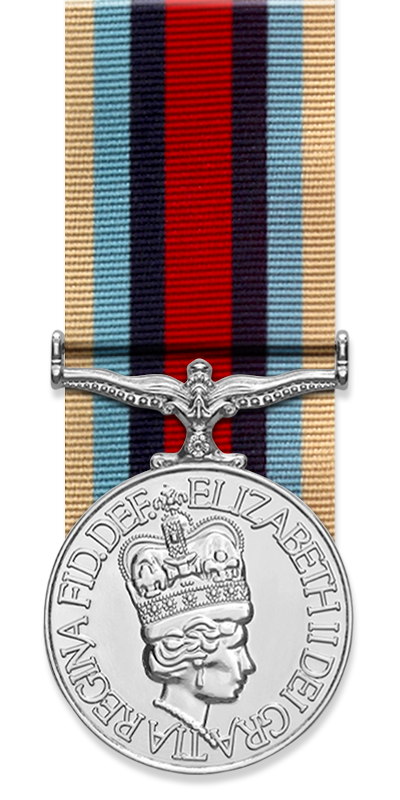
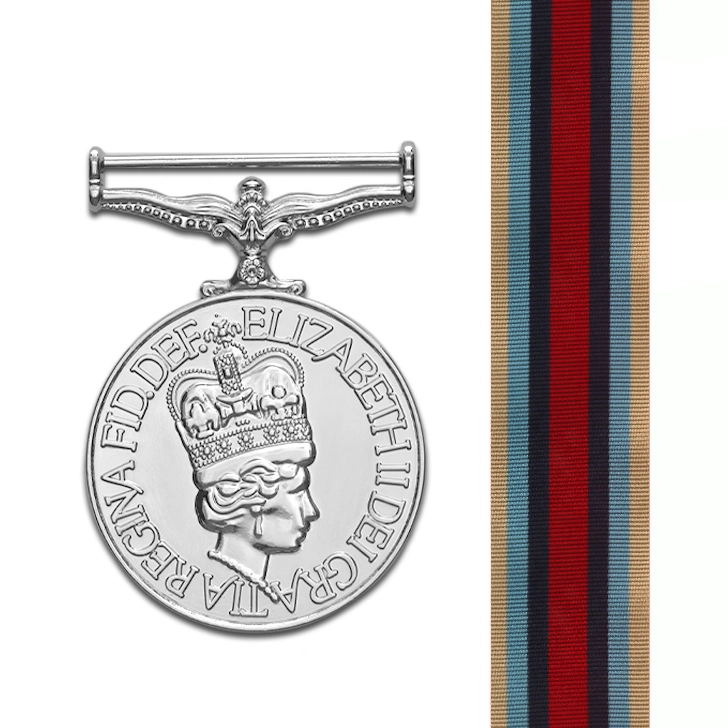
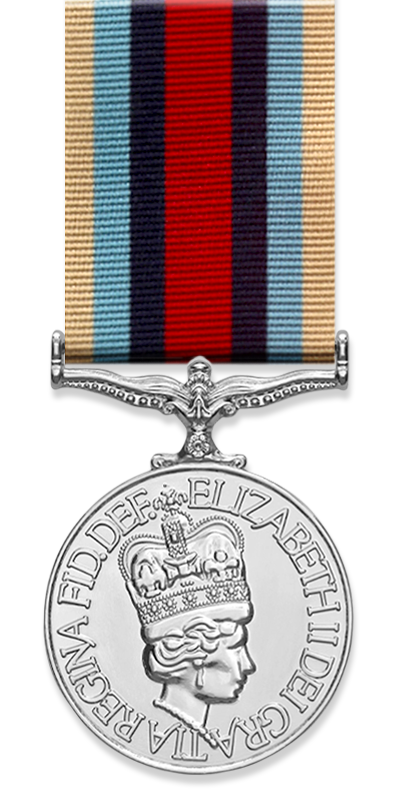
The medal is silver and circular. The obverse bears the crowned effigy of Queen Elizabeth II with the inscription ELIZABETH II DEI GRATIA REGINA FID DEF. The reverse shows the Union Flag within the inscription FOR OPERATIONAL SERVICE, over a four-pointed star for the points of the compass, with four coronets between the points for the Crown and the three services: royal, naval, mural for the Army and astral for the Royal Air Force. The recipient's details are impressed on the rim.
The ribbon
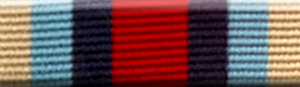
Red, navy and light blue centre with buff edges.
The ribbon has a broad central red stripe flanked on each side by navy blue and light blue for the three services, with an outer stripe of light brown or buff representing the Afghan landscape.
Clasps
Service in Afghanistan itself is marked by a clasp, with a separate clasp for the 2021 Kabul evacuation.
Eligibility
The medal is awarded for operational service on or in support of operations in Afghanistan from 11 September 2001.
- Service in Afghanistan for the qualifying period earns the medal with the Afghanistan clasp; qualifying support service in neighbouring countries earns the medal without a clasp;
- The Operation Pitting clasp marks service in the Kabul evacuation of August 2021; there is no minimum period for those killed, wounded, decorated or mentioned in despatches;
- This is a British award; Australians received Australian awards for the same service. Where held, it takes its place in the Australian Order of Wearing.
Order of wear
Imperial and British awards were the honours of Australia before the Australian honours system was established in 1975. Australians who served the campaigns of these medals generally received the corresponding Australian awards; where a British award is held, it takes its place in the Australian Order of Wearing among the awards of other recognised governments and international organisations, worn after Australian campaign medals in date order.
Frequently asked questions
What is the Operational Service Medal for Afghanistan awarded for?
Operational service on or in support of operations in Afghanistan from 11 September 2001, through the withdrawal of 2021.
What is the Operational Service Medal?
A British campaign medal series introduced in 1999 to replace the General Service Medal 1962, using one medal design with a different ribbon for each campaign.
What are its clasps?
The Afghanistan clasp for service in Afghanistan itself, and the Operation Pitting clasp for the 2021 Kabul evacuation; service in support from neighbouring countries earns the medal without a clasp.
Would an Australian wear this medal?
Australians who served in Afghanistan received Australian awards, chiefly the Australian Active Service Medal; the British medal is a foreign award, worn in the Australian order among other governments' awards where held.
What does the reverse show?
The Union Flag within FOR OPERATIONAL SERVICE, over a compass star with four coronets for the Crown and the three services.
Is it named to the recipient?
Yes, impressed on the rim.