
History
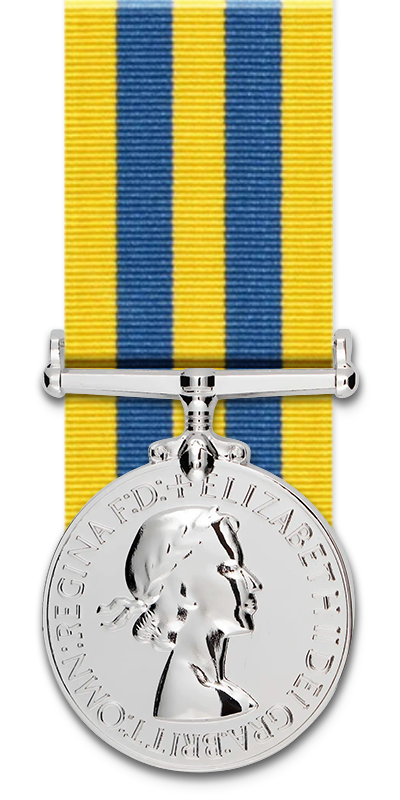
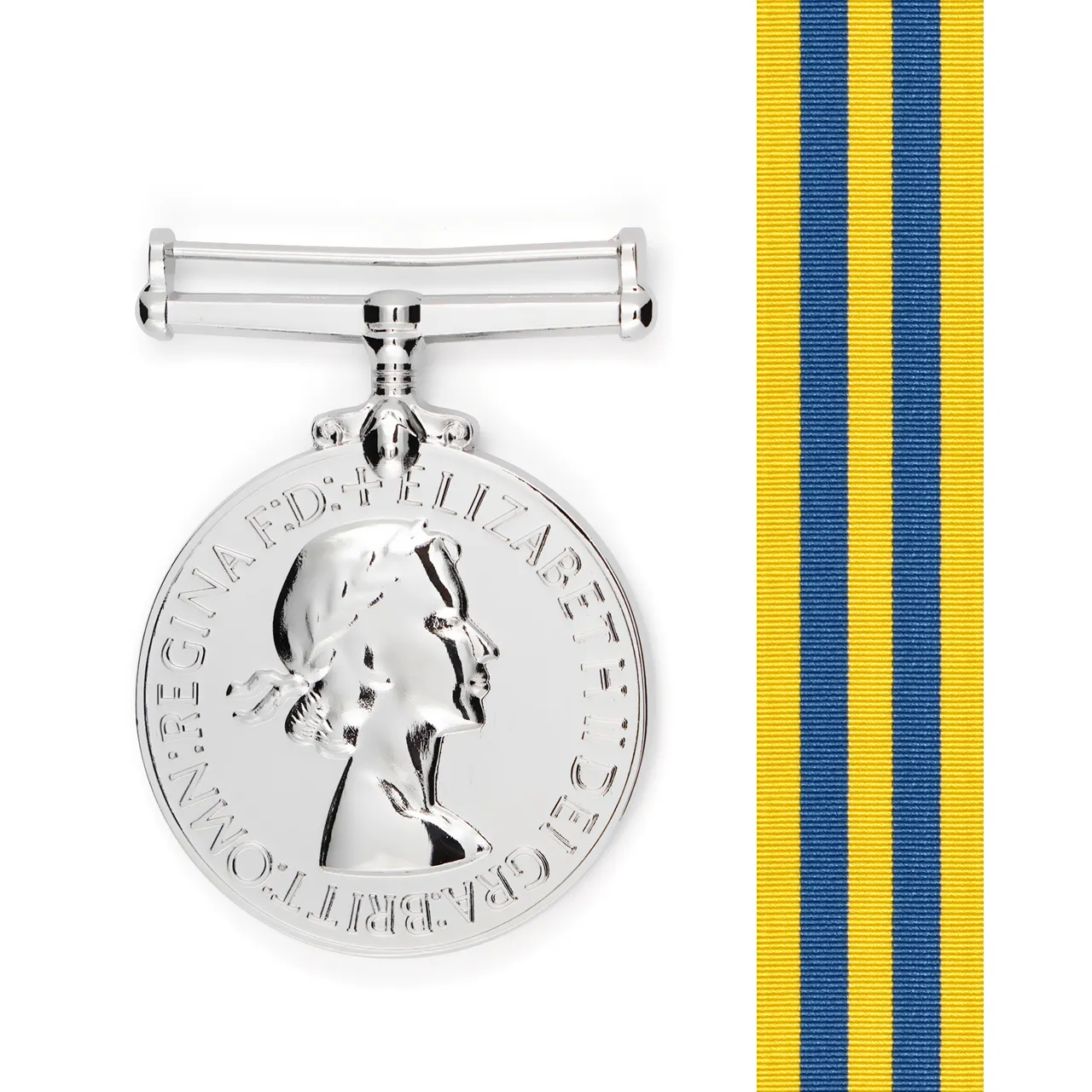
The Korea Medal, often called the Queen's Korea Medal to distinguish it from the United Nations medal for the same war, was instituted in 1951 as the British Commonwealth campaign medal for the Korean War. It was awarded to forces of Australia, Britain, Canada and New Zealand for service in the theatre of the Korean Peninsula between 2 July 1950 and 27 July 1953: one day's service on land, one operational sortie in the air, or 28 days afloat off the Korean coast.
The Korean War was the first in which United Nations forces took a combat role, and roughly 16,000 Australians served, in the infantry battalions of the Royal Australian Regiment, the ships of the Royal Australian Navy and the fighters of the Royal Australian Air Force. Every recipient of the Korea Medal also automatically received the United Nations Service Medal for Korea, and the two are almost always worn together. As an Imperial award it retains its place in the Australian Order of Wearing.
Design & ribbon
The medal
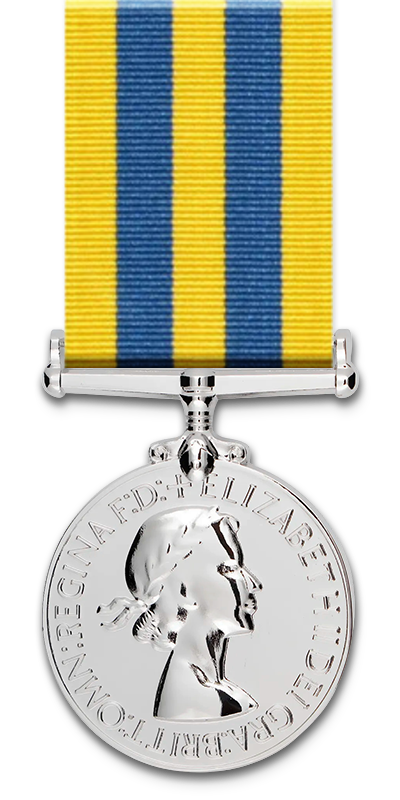
The medal is cupro-nickel, 36 millimetres in diameter, its obverse bearing the crowned effigy of Queen Elizabeth II. The reverse shows Hercules wrestling the hydra, a symbol of the struggle against a many-headed aggression, with the word KOREA below. The recipient's details are impressed on the rim.
The ribbon
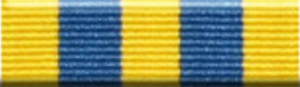
Five stripes of yellow and blue, the blue for the United Nations.
The ribbon has five equal stripes, three yellow and two blue, the blue representing the United Nations.
Clasps
No clasps were awarded; a mention in despatches is marked by an oak-leaf emblem on the ribbon.
Oak leaf (mention in despatches)
No clasps were awarded with the Korea Medal, but a single bronze oak-leaf emblem is worn on the ribbon to denote a mention in despatches; only one is worn regardless of the number of mentions.
Eligibility
The medal was awarded for service in the theatre of the Korean Peninsula between 2 July 1950 and 27 July 1953.
- One day's service on land in Korea, one operational sortie over Korea or Korean waters, or 28 days afloat off the Korean coast qualified;
- No clasps were awarded, but a mention in despatches is marked by a single bronze oak-leaf emblem; every recipient also received the United Nations Service Medal for Korea;
- As an Imperial award it retains its place in the Australian Order of Wearing.
Order of wear
Imperial awards were the honours of Australia before the Australian honours system was established in 1975, and they retain their place in the Order of Wearing. They are worn after the Australian honours of their kind and among the Imperial awards in the order set by the Australian Order of Wearing, which follows the British order of precedence.
Frequently asked questions
What is the Korea Medal awarded for?
Service in the theatre of the Korean Peninsula between 2 July 1950 and 27 July 1953: one day on land, one operational sortie, or 28 days afloat off the coast.
Why is it called the Queen's Korea Medal?
To distinguish it from the United Nations Service Medal for Korea, awarded for the same war; the two are different medals and were awarded together.
What does the reverse show?
Hercules wrestling the hydra, a symbol of the fight against a many-headed aggression, with the word KOREA beneath.
Did every recipient get the UN medal too?
Yes. All recipients of the Korea Medal automatically received the United Nations Service Medal for Korea, and the two are almost always worn together.
Is it named to the recipient?
Yes, impressed on the rim with the recipient's details.
Does it carry a post-nominal?
No; it is a campaign medal and carries no post-nominal.