
History
The Emergency Services Medal was introduced in 1999 alongside the Ambulance Service Medal, completing the set of distinguished service medals for the uniformed civil services. It recognises distinguished service by members of emergency services across Australia, and by people involved in emergency management, training or education: the unit controllers and rescue trainers of the state emergency services, the flood boat and storm crews, and the planners who ready communities before the sirens sound.
State emergency services and voluntary emergency organisations are eligible, with awards made by the Governor-General on the recommendation of the responsible ministers within annual quotas, announced in the Australia Day and King's Birthday honours lists. Amendments approved on 23 December 2021 enabled COVID-19 related service to be recognised above the quotas, and a person may receive the medal only once.
Design & ribbon
The medal
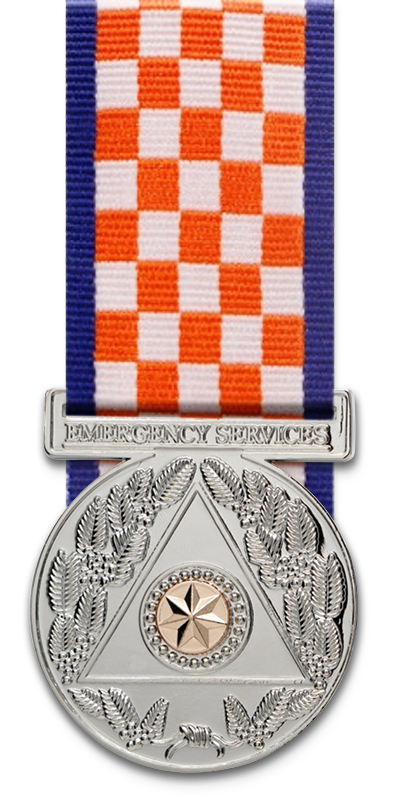
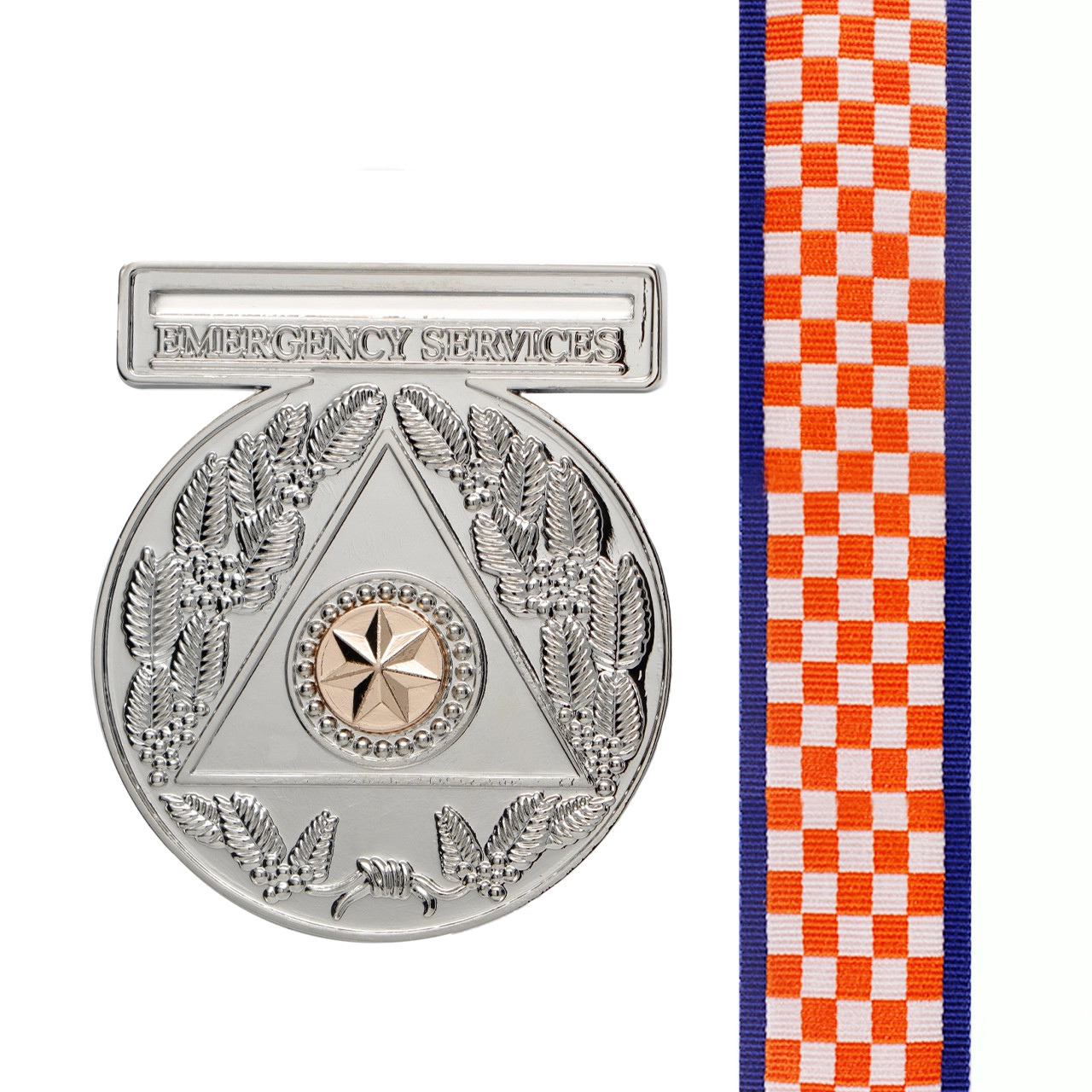
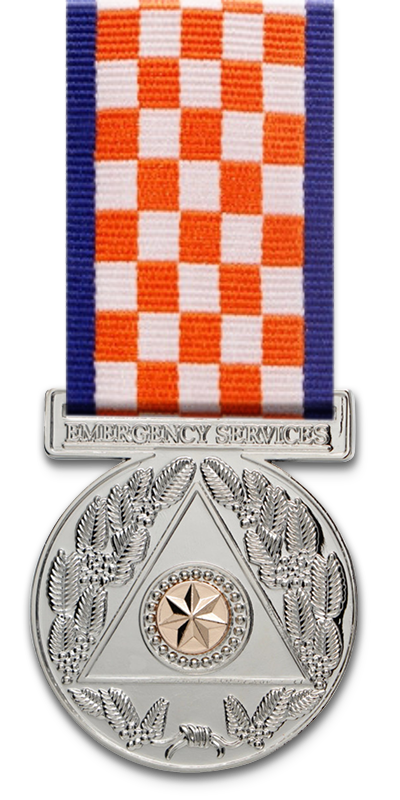
The central motif of the Emergency Services Medal is a raised equilateral triangle with bevelled edges, the emblem of the emergency services, bordered by stylised sprays of wattle. The centre of the triangle carries a raised Federation Star surrounded by twenty four balls, representing the twenty four hours per day the emergency services are available to the community. The medal is in silver and bronze colouring, and the reverse bears the inscription For Distinguished Service.
The ribbon
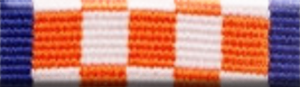
Orange and white checkerboard between royal blue edges.
The 32 millimetre ribbon features a centre band of an orange and white checkerboard pattern, flanked on each outer edge by a band of royal blue.
Eligibility
The medal is awarded by the Governor-General on the recommendation of the responsible Commonwealth, state and territory ministers, for distinguished service as a member of an emergency service or in emergency management, training or education.
- State emergency services and voluntary emergency organisations are eligible, with annual quotas set against each service's strength;
- The medal may be awarded regardless of eligibility for any other award for the same service, but a holder may not receive it a second time;
- Awards are announced each January and June, and recipients are entitled to the post-nominal ESM.
Order of wear
The medal is worn among the Australian distinguished service medals for the police, fire, ambulance, emergency and correctional services, after the decorations and before the Imperial gallantry medals. The precise neighbours should be confirmed against the current Australian Order of Wear.
Frequently asked questions
What is the Emergency Services Medal awarded for?
Distinguished service by members of emergency services across Australia, and by people involved in emergency management, training or education.
Who is eligible?
Members of state emergency services and voluntary emergency organisations, together with those who serve emergency management in planning, training and education roles.
How are recipients chosen?
Each jurisdiction nominates through its responsible minister, and the Governor-General makes the awards within annual quotas, announced in the Australia Day and King's Birthday honours lists.
What does the triangle mean?
The raised equilateral triangle is the emblem of the emergency services, carrying the Federation Star ringed by twenty four balls for the around the clock availability of the services.
Is the name Emergency Service Medal or Emergency Services Medal?
The official name is the Emergency Services Medal, plural, though the singular form appears often in informal use.
Does it carry a post-nominal?
Yes: ESM.