
History
The Distinguished Service Decorations were established on 15 January 1991 by Letters Patent, gazetted that February, to recognise command, leadership and the distinguished performance of duty in war. The Distinguished Service Cross is the highest of the three levels, above the Distinguished Service Medal and the Commendation for Distinguished Service, and is awarded for distinguished command and leadership in warlike operations. As first made, the criterion read in action; in 2011 it was amended to in warlike operations, better matching the way modern commands are exercised.
Awards are announced in the Australia Day and King's Birthday honours lists, no quotas apply, and the decoration may be awarded posthumously and, with their government's concurrence, to foreign defence force members serving on exchange or posting with the Australian Defence Force. Well over two hundred awards have been made since 1991, including a small number of bars for second and even third awards.
Design & ribbon
The medal
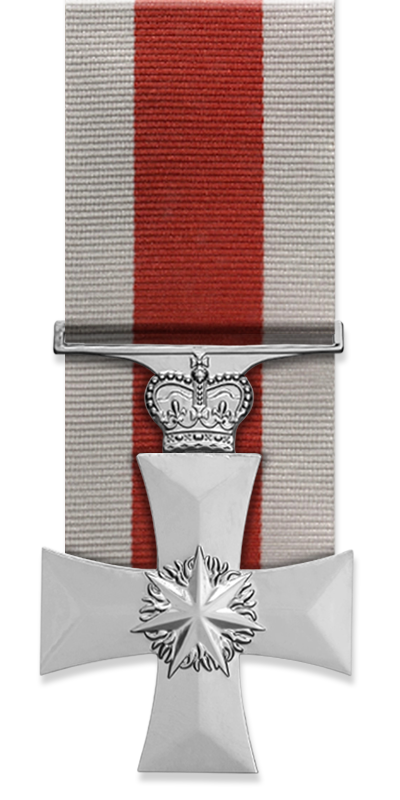
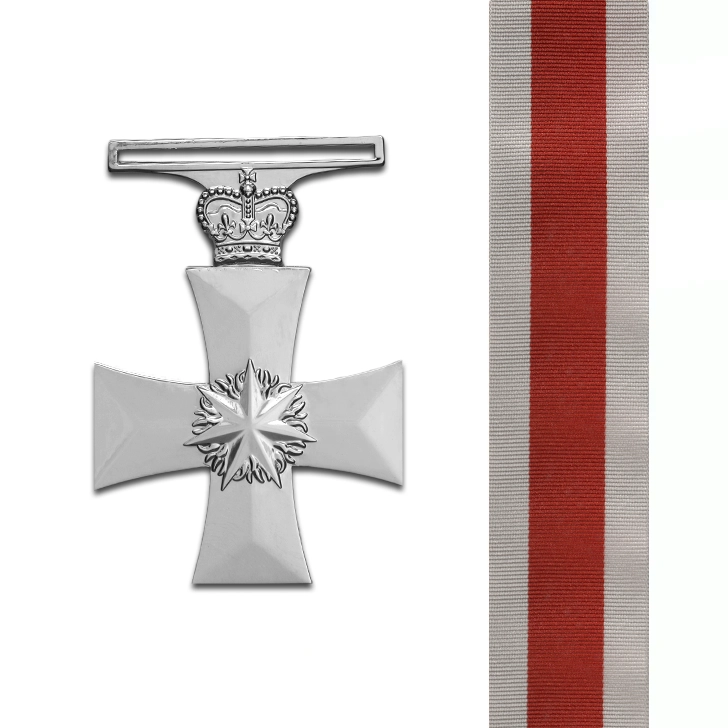
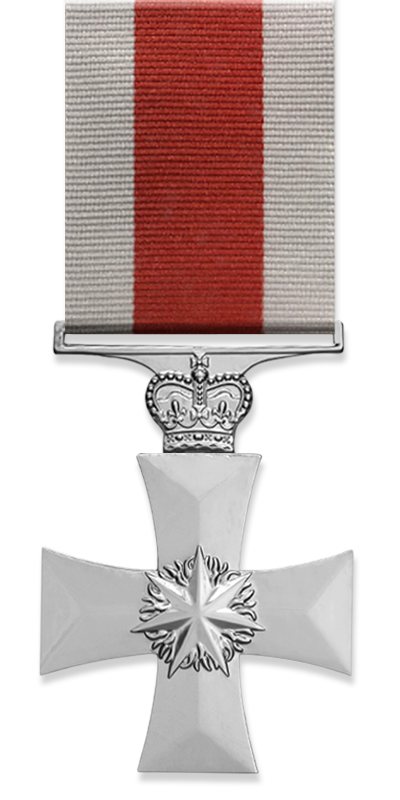
The Distinguished Service Cross is a modified Maltese Cross of nickel-silver ensigned with the Crown of Saint Edward. The obverse bears a Federation Star surmounted on a disc of flames; the reverse has a panel for the recipient's details. The medal hangs from a nickel-silver suspender bar.
The ribbon
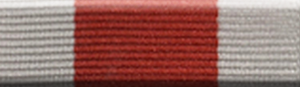
A central ochre-red stripe flanked by silver-blue, the colours of the distinguished service decorations.
The ribbon has a central stripe of ochre-red flanked by narrower stripes of silver-blue.
Clasps
A further award of the Cross is denoted by a bar worn on the ribbon.
Eligibility
The decoration is awarded by the Governor-General on the recommendation of the Minister for Defence, for distinguished command and leadership in warlike operations.
- All ranks are eligible, quotas do not apply, and the decoration may be awarded posthumously;
- Foreign defence force members serving on exchange or posting with the Australian Defence Force may be awarded the decoration with the prior concurrence of their government;
- Recipients are entitled to the post-nominal DSC, with and Bar or and Bars added for further awards.
Order of wear
The decoration is worn among the gallantry and distinguished service decorations, interleaved with the Imperial awards of equivalent standing. The precise neighbours in the order of wear should be confirmed against the current Australian Order of Wear.
Frequently asked questions
What is the Distinguished Service Cross awarded for?
Distinguished command and leadership in warlike operations. It is the highest of the three Australian distinguished service decorations.
How does it differ from the gallantry decorations?
The gallantry decorations recognise individual acts of gallantry in action. The distinguished service decorations recognise sustained command, leadership and performance of duty in warlike operations.
Is it the same as the Imperial DSC?
No. The Imperial Distinguished Service Cross was a Royal Navy gallantry decoration. The Australian award of 1991 recognises command and leadership, applies to all Services and ranks, and sits at a different place in the order of wear.
Why did the wording change in 2011?
The original criterion read in action. In 2011 it was amended to in warlike operations, recognising that modern command and leadership is often exercised across an operation rather than in a single engagement.
Can foreign officers receive it?
Yes. Foreign defence force members serving on exchange or posting with the ADF may be awarded the decoration with the prior concurrence of their government.
Does it carry a post-nominal?
Yes: DSC, with and Bar or and Bars for further awards.